News Story
Happy National Engineers Week!

In honor of this National Science and Engineering Week, the Fischell Institute is proud to celebrate our incredible Fischell Foundry team of engineers.
The Fischell Foundry is the driving force behind the Fischell Institute’s ability to support device innovators across the entire commercialization pipeline. Creating medical devices requires coordination, intellectual capital, specialized resources, advanced facilities, and creative individuals with a strong desire to learn and succeed. Our team is dedicated to transforming basic research into clinical practice and commercial success.
Meet the Fischell Foundry engineers:
Assistant Director: Martha Wang, Ph.D.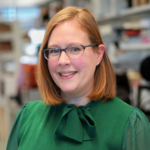
Martha Wang is a bioengineer and the assistant director of the Fischell Institute. She is also the faculty mentor of the Fischell Institute and MPower Entrepreneurship Fellowship program where fellows develop and commercialize medical devices. Concurrently, Wang teaches in the Fischell Department of Bioengineering focusing on biomaterials and commercializing medical devices. Her work with medical device development focuses on regulatory affairs, manufacturing, and commercialization requirements.
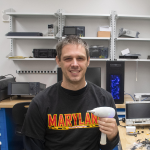 Chief Engineer: John Rzasa, Ph.D.
John Rzasa is an electrical engineer specializing in laser and electro-optical system design and fabrication, mixed-signal circuit design, custom data acquisition systems, and graphical user interfaces for data control and collection. His medical device innovations include a pulsed magnetic system for pain treatment, a smart otoscope, and a novel measurement system for simultaneously characterizing the electrical and optical properties of chemical and biological materials. He has also developed an electronic home plate capable of differentiating between balls and strikes.
Senior Engineer: Kevin Aroom, M.S., P.E. 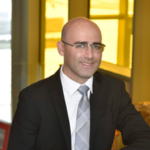
Kevin Aroom is a biomedical engineer with expertise in mechanical design, rapid prototyping, medical imaging segmentation, and biomedical instrumentation. His work ranges from defining device specifications with other researchers to design work with Computer-Aided Design (CAD) software to fabrication using 3D printing or Computer Numeric Control (CNC) machining. He also can be found programming or testing prototypes using equipment in the lab. Aroom’s projects include a pediatric growth tracking device, orthopedic implants, automation of standard bedside procedures, a highly functional wearable device that can track several physiological attributes, and a low-cost laparoscope.
Engineer: Ryan Smith, B.S. 
Ryan Smith is a mechanical engineer who has a knack for designing and refining device prototypes. He is experienced in several additive and subtractive manufacturing processes, device ideation and prototyping, and benchtop testing. Based at UMB, he works closely with physicians and clinicians from the University of Maryland Medical Center and Medical System to build and test medical device prototypes. Smith’s work includes 3D-printed phantoms used for device testing and dosimetry validation, bone fixation devices, and arterial access/graft management devices. Through the Fischell Institute, he has worked with College Park PIs to build custom lab systems to automate experimental data collection and sample management.
Engineer: Quinn Burke, M.Eng.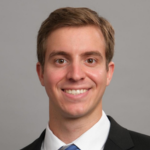
Quinn Burke is a bioengineer that has been involved with the Fischell Institute since 2019, beginning as an undergraduate researcher and then completing his M.Eng through the Fischell Institute and MPower Entrepreneurship Fellowship. Burke offers expertise in prototype design, CAD, CAM for CNC machining, 3D printing, regulatory testing and procedures, data analysis, and Arduino programming. Select projects include respirator mask filtration and regulatory testing during the height of the COVID-19 pandemic, a microfluidic device for cell and extracellular vesicle separation, biocompatibility testing for dental devices, and a remote electrochemical sensing and cell actuation device.
Published February 27, 2026
Related Stories
Stories / July 27, 2026
Fischell Institute Engineers Develop Advanced Eye Pressure...

Stories / June 20, 2025
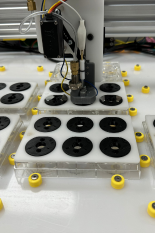
Fischell Institute Engineers Build Custom Automated System to...
Stories / January 17, 2025
Fischell Foundry intern awarded ASPIRE scholarship to advance...
Stories / Oct 6, 2026
FDA Awards Sochol-Led Team $873K to Build Retina Models

Stories / Oct 5, 2026
Fischell Institute Intern: Kishore Krishnakumar

Stories / Oct 5, 2026
Fischell Institute Intern Spotlight: Jaehee Yi

Stories / Oct 5, 2026
Shah Lab Advances Ferroelectric-Based Neuromorphic Hardware for...

Stories / Oct 5, 2026
Mueller Lab Receives Two NIH Grants to Advance Low-Cost Cancer...

Stories / Oct 5, 2026
UMD Team Secures $200,000 to Commercialize Wearable Vascular...

Stories / Oct 5, 2026
Celebrating LGBTQ+ History Month 2026

Stories / Oct 5, 2026
Mechanical Engineering Doctoral Student Rho Ma’s Varied...

Stories / Sep 22, 2026
Fischell Institute Intern Spotlight: Minh Nguyen

Stories / Sep 22, 2026
Two Years Running, Maryland #12 Among Publics for Undergrad...
